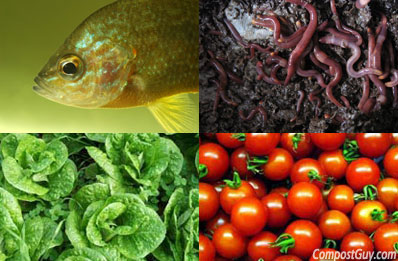
A recent Treehugger article alerted me to the fact that the folks at Growing Power are involved in what sounds to be a very exciting new proposed project in Milwaukee, called The Urban Agriculture Center.
The planned center will apparently feature a 150,000-sq ft indoor aquaculture/agriculture facility combined with educational facilities, sustainable farming exhibits, a restaurant and fish market.
As the author of the Treehugger article points out, the Urban Agriculture Center website is somewhat confusing, so it is quite challenging trying to find pertinent information regarding the status of the project. Nevertheless, this is certainly very exciting news, and something I look forward to following as it develops.
Here is a blurb from a press release posted on the site (also included as part of the TH article):
In Milwaukee, the Urban Aquaculture Center is working to expand the industry using an approach that engages the community. The UAC hopes to have the City of Milwaukee lead the growth of urban aquaculture in the United States. To address the problem of the risk involved in start-up operations, the UAC seeks to have all of Milwaukee take on urban aquaculture as a new industry. This project requires the cooperation of all stakeholders — government, academia, and local businesses. What the UAC proposes is a large-scale perch production facility and an education center for the public, oriented to urban agriculture, particularly aquaculture.
Milwaukee is uniquely positioned for this endeavor for two primary reasons: its proximity to fresh water and to Growing Power, an urban teaching farm growing edible plants with fish in the same system. The Great Lakes WATER Institute and Growing Power are conducting tests on the ability of plants, worms and bacteria to remediate water in a perch grow-out system. The results thus far are encouraging. Adult perch have done well in a greenhouse environment with only a pump to move water to gravel beds containing plants and beneficial nitrifying bacteria. This system, which closely mimics nature, shows promise.
If you thought my idea for an aquarium aquaponics system was cool, you HAVE to check this video out! Patti ‘The Garden Girl’ Moreno has devised and set up an awesome home aquaponics system - and one with a LOT more potential for growing crops than mine! I love the idea of using heavy duty metal shelving to hold the system - I think a unit like that would come in hand for a variety of different growing/composting projects!
As I mentioned in another aquaponics post, I am planning to put together my own small aquaponics system for fun, and of course to see if I can get it to work properly. I’ve always been fascinated with both hydroponics and aquatic biology - among numerous other related topics - so it’s only natural (no pun intended - haha) that I would gravitate towards aquaponics.
For those of you unfamiliar with the term, aquaponics is simply a combination of aquaculture and hydroponics. Water is pumped from fish tanks to grow beds where plants (typically some sort of edible produce) take advantage of the nutrient rich water. The plants and gravel (or whatever growth media you use) serve to filter the water before it eventually ends up back in the fish tanks. Alternatively, you can also grow plants directly in the fish tanks using floating rafts of some sort.
For my experimental system I will simply be periodically pumping water from a small aquarium into a homemade grow bed, then allowing it to drain back into the fish tank - something similar to my ‘artist’s rendtion’ up above.
I’m going to make the grow bed using some PVC piping and some basic hydroponics supplies, namely small grow baskets and gravel. I’ll cut holes specifically sized for the baskets so that they can sit snugly in place.
I have ordered some small submersible pumps and tubing so I’ll be able to pump the water up to the grow bed. I have also been growing basil seedlings in preparation for setting this sytem up. We love fresh basil (and pay a decent amount in order to have a constant supply on-hand in the winter), so it seemed like a natural choice. It is also a good choice since it relies mostly on vegetative growth, unlike a crop like tomatoes which would be more complicated due to flowering requirements etc.
Anyway, I think its going to be a lot of fun! Hopefully I’ll be able to create what I have in my head - or at least something similar. I’m not known for my DIY skills, so this will be good practice.
As per usual, I will keep everyone posted on my progress!
As mentioned recently, I’ll be writing a fair bit about aquaponics here at CompostGuy - but certainly not so much that you’ll be wondering why I didn’t call myself ‘Aquaponics Guy’!
Again, this is a topic that really interests me, since it essentially rolls a bunch of my major interests (aquatic biology, fish keeping, plant growing, waste management) into one cool package! I’ve written some posts about aquaponics over at EcoSherpa (see ‘Aquaponics - Hydroponics, Mother Nature Style‘ and ‘Backyard Aquaponics‘), but this will be the new home of my aquaponic meanderings! I’m hoping to put up an aquaponics resource page in the next couple of weeks, and will certainly be writing more posts about it.
Anyway, with that long-winded introduction out of the way, I should get to the actual point of this post! A little while ago while perusing my google notifications list (I get notified when blog/news stories about certain topics are written) I came across the mention of the new Backyard Aquaponics magazine. I’m a huge fan of the Backyard Aquaponics site, and have had some nice e-mail exchanges with Joel Malcom (owner & aquaponics guru supreme), so I was really excited to see them launch something like this.
Let me tell you, their inaugural edition certainly ‘over-delivers’ big time - WOW! If you have any interest in aquaponics I highly recommend you check it out. The pdf is quite large (and you may need the free Adobe Reader if it’s not installed on your computer), so it might cause some issues for those with a slow connection - but it is definitely worth the wait.
Sitting pretty at 35 pages, this document is more like a small manual than a magazine (most magazines provide more pages of advertising than actual content)! It starts with a great introduction to the topic, including a section on the “myths” of aquaponics - great for anyone new to aquaponics, or in need of a refresher. Some of the other topics include the nitrogen cycle, aquaponics equipment, ‘Good Plants for Aquaponics’, and ‘By the Barbeque’ (intro to their recipe section). If the content itself if not enough, they have also jammed the newsletter full of amazing photos - great eye candy for those of us who are visually-inclined (call me unsophisticated, but I love pictures! lol).
I sure wish I was a kid again! I found this YouTube video featuring the aquaponics program at the Kid’s Culinary Academy. This sounds like a fantastic educational opportunity for children.
Just so you know, I will likely be talking a lot more about aquaponics here on the site. I know it has very little to do with composting, but it is definitely a prime example of turning a ‘waste’ into a resource, and it also happens to be a subject I’ve been utterly fascinated with for years.
I will be putting together an aquaponics resource page, and am actually in the process of planning out a small indoor aquaponics system at home. I’ll write much more about that before too long.
A short time ago I received an e-mail from a gentleman named Bailey, letting me know about his new backyard farming site. I hate to say it, but given the fact that he was requesting a link exchange without having contacted me before, I suspected I wasn’t going to be all that impressed with his site (I’ve become skeptical in my old age - haha).
I was definitely wrong, and I’m really glad I took the time to check out the site!
When I visited Ecoyardfarming.com, I quickly realized that Bailey and myself have a lot of similar interests! His website covers a wide array of topics - all of them near and dear to my heart! Aside from the overall theme of backyard farming, Bailey writes specifically about vermicomposting, aquaponics and mushroom growing, just to name a few of the topic areas.
Here is a blurb from his Home page:
My purpose in creating this site is to share my experiences and knowledge in growing and cultivating a variety of “backyard” foods in an organic and ecologically friendly manner. I will be introducing some fun and exciting new areas of food production that most folks have never heard of!
Stay tuned as I will be posting regularly on ways to grow a variety of foods that are healthier and tastier, have greater yields in less space, are chemical free, protect and enhance the environment, and are cheap and rewarding to grow. My own Florida backyard will be “the laboratory” to experiment with a variety of exciting new “backyard farming” adventures. Of course, many of these ideas are applicable on a larger farming operation and not just restricted to a backyard “home grown” setting.
I am particularly interested in the idea of permaculture, wherein a number of “inputs” and “outputs” of the farming (and property maintenance) process are utilized in such a way that practically nothing goes to waste. It is imperative that we get back to a sustainable approach to living (if we desire to save both nature and ourselves).
As I think I’ve mentioned previously, one of the great things about blogging is that it’s a great way to meet really interesting, like-minded individuals. Connecting with Bailey is a prime example of this, and I’m certainly glad he got in touch! I’ve added his RSS feed to my reader and am looking forward to becoming a regular reader of his blog!
If you haven’t already, I highly recommend you check out EcoYardFarming.com. I think you’ll be glad you did!
Needless to say, whenever I read about someone using both vermicomposting and aquaponics as part of a larger integrated system, I get pretty excited!! Growing Power is an organization doing exactly that.
This non-profit organization, based in Milwaukee (with another location in Chicago), was founded in 1998 by Hope Finklestein - but the person most readily associated with Growing Power is Will Allen, a 6′ 7″ former pro-basketball player. After retiring from the American Basketball League and spending a number of years in the corporate world, Allen purchased (in the mid 90’s) a small piece of land zoned for agriculture within Milwaukee’s city limits - land that would eventually become the site for Growing Power.
Allen began growing crops on the land and started a non profit called Farm City Link. When Hope Finklestein toured the operation (shortly after founding Growing Power) and met Allen, the two quickly realized the similarity of their overall vision and decided to merge their efforts. Finkestein has since moved to Alaska, but remains very active in the organization.
Here is Growing Power’s Mission (as stated on the site):
Growing Power, Inc. is a non-profit organization and land trust supporting people from diverse backgrounds and the environment in which they live by helping to provide equal access to healthy, high-quality, safe and affordable food. This mission is implemented by providing hands-on training, on-the-ground demonstration, outreach and technical assistance through the development of Community Food Systems that help people grow, process, market and distribute food in a sustainable manner.
This is EXACTLY the type of organization I would love to get involved with!
I found this interesting video about Growing Power on Youtube:
The power source for the business is the second greenhouse, which holds the composting operation. Every week it welcomes 8,000 pounds of mash from an organic brewery, a thousand pounds of coffee grounds from local restaurants and tons of fruit and veggies that arrived at local food banks too late to be eaten. The process of composting throws off enough heat to keep the greenhouses warm through Milwaukee’s freezing winters.
And the way the compost is managed at Growing Power turns it into a money-maker. Huge bins made from scrap lumber are breeding grounds for tens of thousands of worms that break down the food scraps and produce castings that make top-grade fertilizer and compost every eight weeks.
“I couldn’t farm without these worms,” says Allen, a gentle giant of 6 feet, 7 inches, who refers to the little critters he holds lovingly in his oversized hands as his livestock. One bin of vermi-(worm)compost sells for $36,000 when wrapped into 2-ounce compost tea bags called Milwaukee Black Gold and sold to gardeners or in bulk to high-end growers. “It would take a rancher 300 steers to equal the value of my worm livestock,” he says.
His other livestock dominate the fourth greenhouse, where a 4,400-gallon fishing hole is alive with 4,000 tilapia, a small fish that evolved in Africa and Asia to withstand shallow, still waterways. The tilapia take eight months to reach their final weight, about a pound and a half, and live off algae, water lettuce, duckweed (39 per cent protein) and worms, all grown in the complex. When the tilapia do their business, they provide another business opportunity in another greenhouse, where the water with fish manure is mixed with compost tea to fill hydroponic canals and trays that feed a wide range of herbs and greens, including watercress, cilantro, basil, eddo and baby bok choy.
Some 5,000 pots of herbs grow in the enriched water, ready to be sent weekly to local chefs who lease their pots of herbs for $50 a month. “I can teach any group how to do this in a five-hour workshop,” says Allen.
This is an amazing model for urban agriculture - one that should be adopted in every major city as far as I’m concerned! Not only would it provide an incredible amount of additional healthy food, but it would help city dwellers to maintain a connection with with the earth. I’m hopeful that through the inspirational work of Growing Power and other similar organizations this can eventually become a reality!